Custom Apparel Decoration
Heat Transfer Vinyl Printing — Cut, Pressed & Built to Last
Linushi is a custom heat transfer vinyl printing manufacturer in Sialkot, producing cut-and-pressed vinyl decoration for jerseys, tees, hoodies, and merch runs worldwide. We cut your artwork from premium HTV, weed it clean, and heat-press it into bold, crack-resistant graphics — names, numbers, logos, and lettering that survive the wash. Low 30-piece minimums, OEM/ODM and private-label production, and free digital mockups on every order.
The Process
What Is Heat Transfer Vinyl Printing?
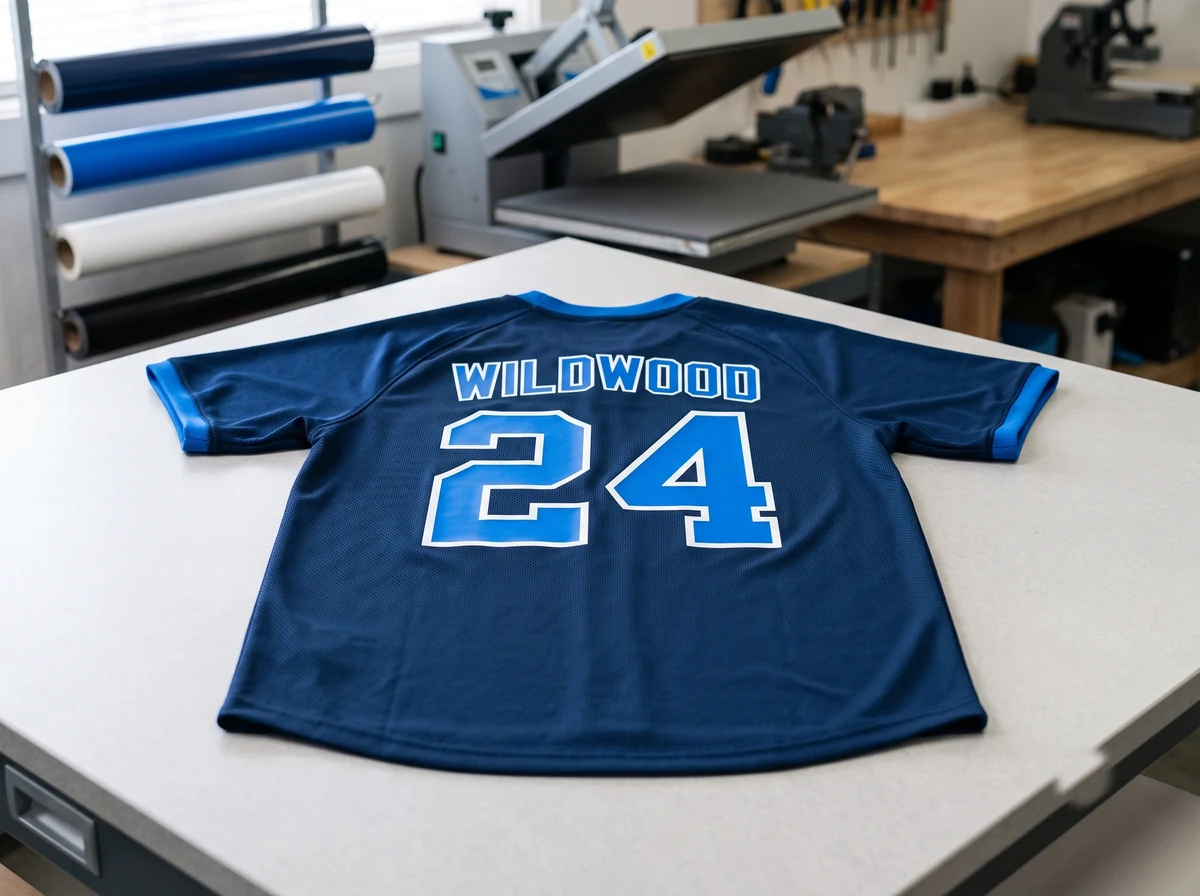
Heat transfer vinyl printing is a decoration method where your design is cut from colored vinyl, the excess is weeded away, and the graphic is bonded to fabric with heat and pressure — leaving a smooth, durable design with crisp, clean edges. Because the colour is solid vinyl rather than ink, the finish is opaque and vivid even on dark garments.
At Linushi, our plotters cut your vector artwork to exact shape, our team weeds it by hand, and our presses bond it at the vinyl’s spec temperature for a permanent, wash-fast result. It’s the method we reach for when a job needs bold solid colour, specialty finishes, or sharp names and numbers on team jerseys — and it runs economically at the small-to-mid quantities most teams and brands actually order.
How It’s Made
How the HTV Process Works
Artwork & Mirror
We finalize your vector art, assign vinyl colours, then mirror the design so it reads correctly once pressed and flipped.
Cut & Weed
A precision plotter cuts the vinyl to your exact shapes. We weed away the surrounding material so only your graphic stays on the carrier sheet.
Heat Press
The graphic is positioned on the garment and pressed at the vinyl’s spec temperature, time, and pressure to bond it permanently to the fabric.
Peel & QC
We hot- or cold-peel the carrier per the vinyl, post-press to lock the bond, then inspect every piece before folding and packing.
Capabilities
Capabilities & Specs
- Bond settings: typically ~150°C / 305°F, 10–15s, medium pressure (varies by vinyl)
- Finishes: matte, gloss, glitter, metallic, holographic, flock, reflective, puff/3D, glow
- Colours: 40+ stock vinyl shades; multi-colour built by layering
- File formats: vector AI, EPS, PDF, SVG, or CDR with fonts outlined
- Detail: we proof line weights and gaps so fine elements weed and bond reliably
- Durability: wash-fast and crack-resistant when applied to spec
- Turnaround: ~7 days on standard runs after mockup sign-off
- MOQ: from 30 pieces per order
What We Press
Fabrics & Garments
- Cotton — tees, polos, classic crewnecks
- Polyester — performance knit, mesh jerseys
- Poly-cotton & tri-blends — fashion-fit tees
- Spandex / elastane blends — stretch activewear
- Fleece — hoodies, joggers, sweatshirts
- Canvas & tote — bags and accessories
- Caps & beanies — heat-press-safe panels
- Jackets & shorts — full kit decoration
Who It’s For
Applications & Industries
- Sports teams — names & numbers on jerseys
- Schools, clubs & academies
- Corporate & staff uniforms
- Event & promotional apparel
- Streetwear & small-batch drops
- Merch & creator brands
- Workwear & hi-vis lettering
- Samples & personalized one-offs
Pick the Right Method
HTV vs Screen Printing vs DTG
Vinyl isn’t always the right call. Here’s where each method wins so you can spec the run honestly — and we’ll recommend the best fit for your design and quantity.
Heat Transfer Vinyl
Best for bold solid-colour graphics, names & numbers, and specialty finishes like glitter, metallic, or reflective. Economical at small-to-mid runs. Less suited to photographic detail.
Screen Printing
Best for large bulk runs of one to a few solid colours — the lowest per-piece cost at volume with a soft hand. Setup cost makes very small runs less efficient.
DTG / Sublimation
Best for full-colour, photographic, or all-over artwork. DTG suits cotton; sublimation suits white or light polyester for edge-to-edge prints.
Compare in depth on our screen printing and embroidery service pages.
Why Linushi
Why Brands Press With Us
30-Piece MOQ
Low minimums keep custom vinyl runs open to teams, clubs, events, and growing brands.
Free Digital Mockups
Approve a clear proof of placement, size, and colour before anything is cut.
OEM / ODM & Private Label
Your branding, your labels — full white-label production from your factory partner.
Worldwide Shipping
Production in Sialkot, delivered to your door anywhere — tracked and on schedule.
Easy to Order
How Ordering Works
Request a Quote
Send your artwork, garment choice, colours, and quantity. We confirm the best method and price.
Free Mockup
We return a digital proof showing placement, size, and vinyl colours for your sign-off.
Sample
Optional pre-production sample — approve a real pressed piece before we run the bulk.
Bulk Production
We cut, press, QC every piece, and ship your order worldwide on schedule.
Questions
Heat Transfer Vinyl FAQs
What is heat transfer vinyl printing?
Heat transfer vinyl (HTV) printing is a decoration method where your design is cut from colored vinyl, the excess is weeded away, and the graphic is bonded to fabric with a heat press. The result is a smooth, durable, crack-resistant design with crisp edges — ideal for names, numbers, logos, and bold lettering.
HTV vs screen printing vs DTG — which should I choose?
Choose HTV for bold solid-color graphics, names and numbers, specialty finishes like glitter or reflective, and small-to-mid runs. Screen printing wins on cost for large bulk runs of a few solid colors. DTG or sublimation is best for full-color or photographic artwork. We’ll recommend the right method for your design and quantity.
What fabrics and garments does HTV work on?
HTV presses cleanly onto cotton, polyester, poly-cotton blends, performance knits, spandex blends, mesh, fleece, and canvas. We apply it to t-shirts, polos, hoodies, sports jerseys, joggers, jackets, caps, and tote bags — anything that can take the press temperature.
How durable is heat transfer vinyl — will it peel or crack?
Applied at the correct temperature, time, and pressure, HTV bonds permanently and withstands repeated washing and wear without peeling or fading. For longest life, wash garments inside out in cold water and avoid high-heat drying.
Can you do multi-color or specialty-finish designs?
Yes. We layer multiple vinyl colors for multi-color designs and stock specialty finishes including glitter, metallic, holographic, flock, reflective, puff/3D, and matte or gloss. Very fine photographic detail is better suited to DTG or sublimation.
What is your minimum order (MOQ)?
Our minimum is 30 pieces per order. This keeps custom HTV runs accessible for teams, clubs, events, and small brands while still giving you OEM/ODM and private-label production.
What file formats do you need for artwork?
Send vector artwork — AI, EPS, PDF, SVG, or CDR — with all fonts converted to outlines. Vector files let us cut clean, accurate shapes. If you only have a raster logo, our team can help redraw it before production.
How should HTV garments be washed?
Turn garments inside out and wash in cold water on a gentle cycle. Tumble dry low or hang to dry, and avoid ironing directly over the vinyl. Following this keeps the design vibrant and bonded for years.
Ready to Press Your First Run?
Send your artwork and garment — we’ll come back with a free mockup, a clear quote, and a 30-piece minimum. Names, numbers, logos, or full team kits, shipped worldwide.